
Cataracts
Cataracts are a common eye condition where the lens inside the eye becomes cloudy causing blurred or misty vision. They usually develop gradually and are most commonly associated with ageing.
What are cataracts?
Inside the eye is a clear lens that focuses light onto the retina at the back of the eye. As we age, this lens can become cloudy, which prevents light from passing through clearly. This clouding is known as a cataract.
Cataracts usually develop slowly over time and may affect one or both eyes. They do not spread from one eye to the other.
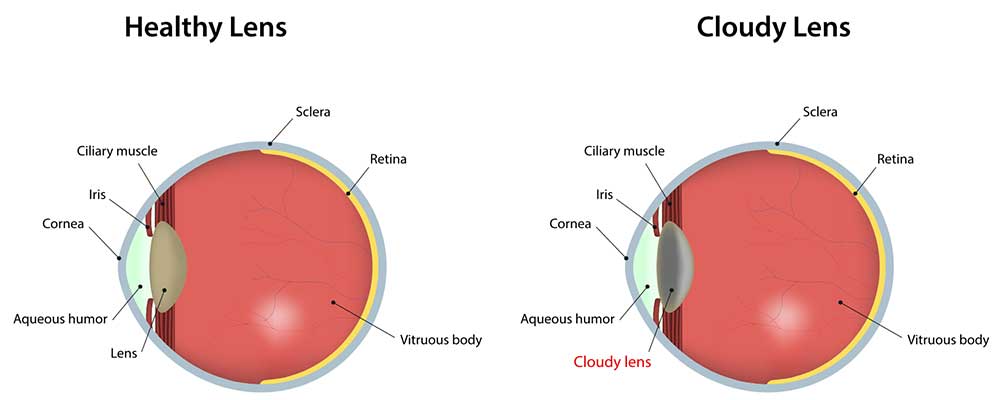
Comparison of a healthy clear lens and a cloudy lens affected by cataracts, which can cause blurred or misty vision.
Symptoms of cataracts
Cataracts do not usually cause pain, but they can gradually affect how clearly you see. Symptoms include:
- Blurred or misty vision
- Increased sensitivity to light or glare
- Difficulty seeing at night
- Colours appearing faded or yellow
- Needing brighter light for reading
- Frequent changes to glasses or contact lens prescription
What causes cataracts?
The most common cause of cataracts is ageing. However, other factors can increase the risk of developing cataracts earlier in life.
- Smoking
- Diabetes
- Long term steroid use
- Excessive exposure to sunlight
- Eye injury or a previous eye injury
- Family history of cataracts
What happens if I have cataracts?
In the early stages, cataract symptoms can often be managed with updated glasses, improved lighting or magnifying aids.
If cataracts begin to significantly affect daily activities such as reading, driving or recognising faces, cataract surgery may be recommended.
Cataract surgery involves removing the cloudy lens and replacing it with a clear artificial lens. It is one of the most commonly performed and successful procedures in the UK and is usually carried out under local anaesthetic.
Why regular eye examinations are important
Cataracts develop gradually and may not be immediately noticeable. Regular eye examinations allow optometrists to monitor changes in your vision and detect cataracts early.
For patients who are unable to attend a practice unaccompanied, NHS-funded home eye tests may be available, subject to eligibility.